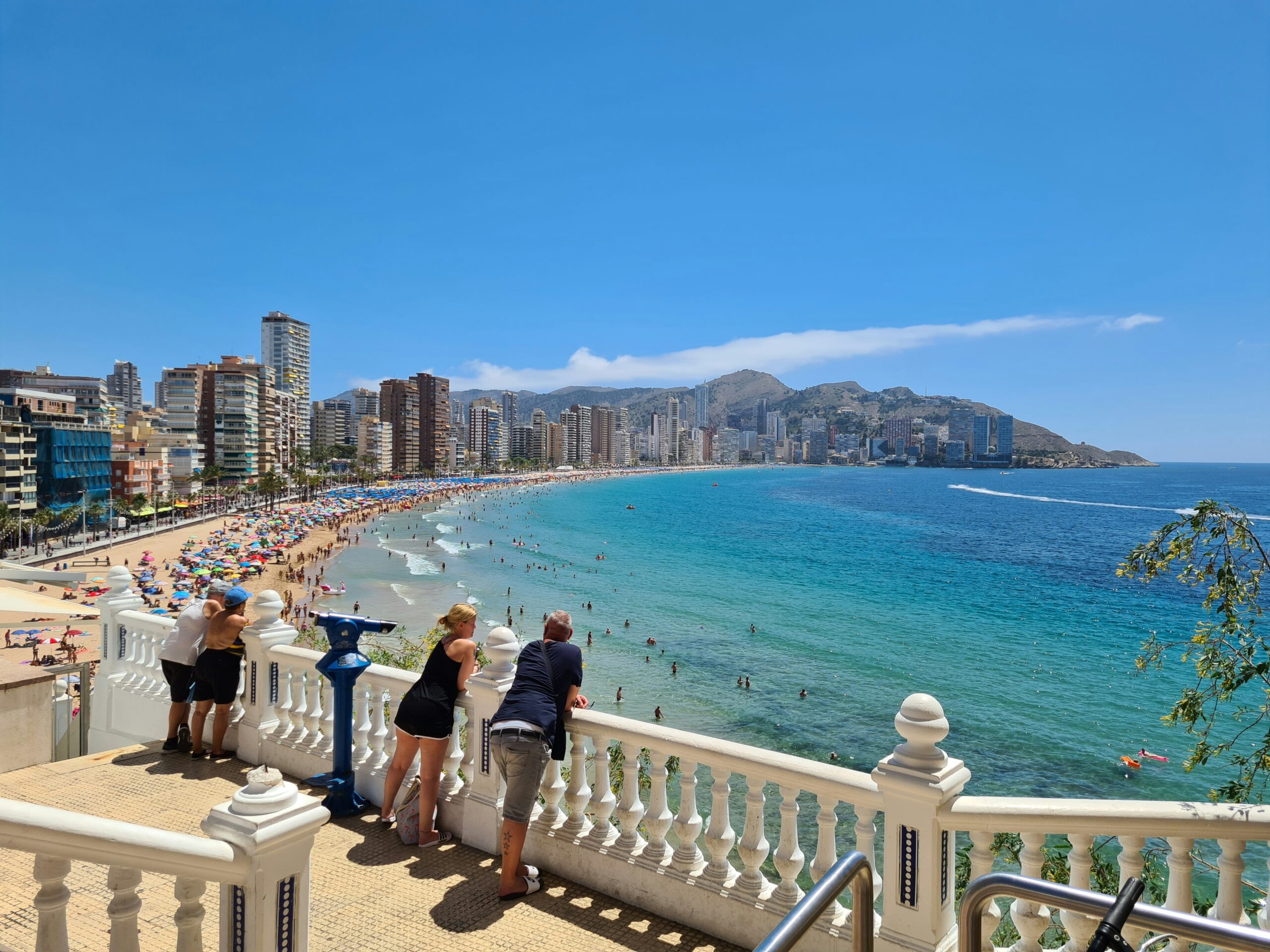
The Spanish Mediterranean region of the Costa Blanca is on the verge of an unusually early heatwave. Meteorologists are warning of significantly rising temperatures, which by late May could reach levels typically seen only in July or August.
Spain Expat Press Editorial Team
by Marlon Gallego Bosbach
Temperatures are rising significantly
According to current forecasts, temperatures are expected to rise noticeably over the coming days. In parts of the province of Alicante, peak values could climb to around 35 to 37 degrees Celsius. This would already bring the region to summer-like conditions, even though the main holiday season is still weeks away.
A significant rise in temperatures is also expected in other parts of Spain, with local values approaching the 40-degree mark not being ruled out.
Summer-like conditions in spring already
What makes the weather pattern particularly notable is its timing: the heat is affecting Spain unusually early in the year. Meteorologists are speaking of a stable high-pressure system that is directing warm air masses from North Africa into southern Europe, resulting in persistently high temperatures.
In some regions, so-called “tropical nights” may also occur, where temperatures do not fall below 20 degrees Celsius even at night – another indication of a pronounced period of heat.
Weather conditions supported by a high-pressure system
A large-scale high-pressure system over the western Mediterranean is responsible for the heat. This so-called “heat dome” phenomenon causes hot air to become trapped over the region with very little atmospheric movement. As a result, the heat can intensify over several consecutive days.
The result: little cooling, rising daytime and nighttime temperatures, and increasing strain on both the population and infrastructure.
Impact on daily life and tourism
For the Costa Blanca, one of Spain’s most important tourist regions, the early heatwave could have noticeable effects. In particular, coastal tourism operators are advising visitors to ensure adequate sun protection and proper hydration.
Local authorities are also preparing to respond to potential heat-related stress, particularly in urban areas and among older people.